President's Corner Munich Calling: What to Expect at ISEE 2026 |
|
|
|
|
With 30 symposia covering everything from air pollution in heavily exposed regions to the latest in data integration and artificial intelligence, this year’s ISEE agenda is the most contemporary yet. ISEE President Gwen Collman highlights the preliminary conference program as ISEE heads to Germany. Read more.
|
|
|
Call for Finance Committee At-Large Members Volunteers Needed |
|
|
|
ISEE is seeking two dedicated members from our general membership to join the Finance Committee as At-Large Members. This is a unique opportunity to contribute to the Society’s long-term sustainability, ensure financial transparency, and help shape the strategic allocation of resources that support our global mission. Applications are due Monday, May 4. Read more. |
|
|
Expanded Language Access
The ISEE Website Now Available in Over 100 Languages |
|
|
|
To enhance accessibility, the ISEE website is now available in over 100 languages. To try this feature, click here to view the newsletters online. Select your preferred language from the list in the lower-left corner of the screen. This translation tool is available on every page of the website, making it easy to navigate content and access important information in your preferred language.
|
|
|
Early Bird Registration Ending Soon |
|
|
|
Explore the first detailed information on symposia and workshops, including session titles and initial descriptions allowing you to gain an early overview of the thematic focus of these sessions and start planning which ones you might like to attend. Join us in Munich, Germany, from August 30 to September 2, 2026, for the 38th Annual Conference of the International Society for Environmental Epidemiology.
Early Bird Registration ends April 30, 2026. |
|
|
|
Environmental Epidemiology wants you... |
...to review papers for our journal!
The number of papers submitted to our journal is rising steadily, and it's a challenge to find good reviewers. If you are interested in supporting the growth of our journal, then please send us your name, position, affiliation and email address as well as three or four keywords describing your interests. We look forward to hearing from you, Jaime Hart and Bert Brunekreef Co-editors in Chief Environmental Epidemiology
www.environmentalepidemiology.com |
|
|
| Supporting Publication Costs for Authors from LMICs |
There is funding support available for ISEE members from low- and middle-income countries (LMICs) to help cover publication costs. Learn more about the process and see if you're eligible here. |
|
|
| Submit a Commentary with ISEE |
We invite ISEE members to submit commentaries on any topic of broad interest to ISEE and the readership of Environmental Epidemiology. For more information about the process and to read our latest commentaries, see here. |
|
|
Student and New Researchers Network
SNRN RRI Webinar: Climate Mis/Disinformation 101 |
|
|
|
The SNRN Rapid Response Initiative (RRI) aims to advance collaborative efforts of scientific integrity and advocacy among early career researchers. As climate mis/disinformation continues to shape public discourse, environmental health scientists need practical tools to identify, evaluate, and respond to false narratives. This webinar provides a foundational primer on the differences between misinformation, disinformation, and malinformation, and equips participants with actionable strategies to combat them. Join Ms. Elyse Martin (Environmental Defense Fund) as she walks through how to spot misleading content, leverage fact-checking resources, and craft effective responses using evidence-based frameworks like the Truth Sandwich. Participants will also explore how to navigate conversations with the community and policymakers, including when and how to engage publicly with climate falsehoods.
Tuesday, April 21 at 11:00 AM EDT |
|
|
2025 Tony McMichael Mid-Career ISEE Award Winner
Compounding Injustice: How Cascading Climate Hazards Amplify Health Disparities |
|
|
|
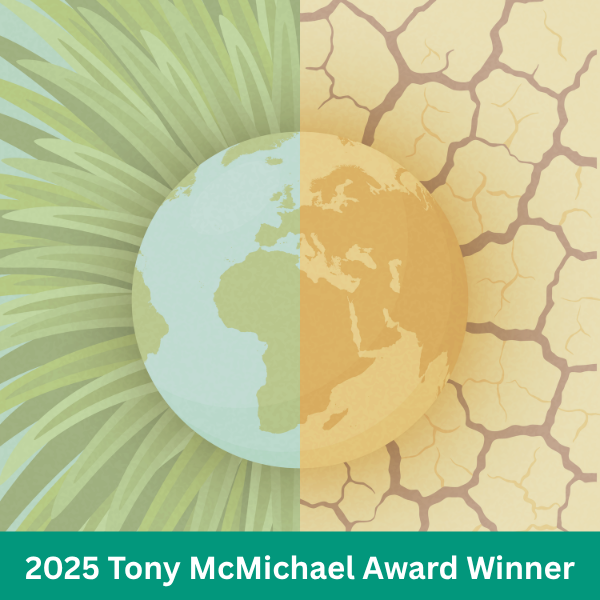
Climate change does not affect populations equally. Low-income and historically marginalized communities face a triple jeopardy: higher cumulative environmental exposures, worse health outcomes for the same level of exposure due to increased susceptibility and reduced adaptive capacity to respond effectively. Yet climate-health research has predominantly focused on single hazards (e.g. heat, wildfire smoke, flooding), analyzed in isolation, masking how real-world compound and cascading climate exposures may systematically amplify health inequalities. Read more
Join us on Thursday, April 30 at 11:00 AM EDT with Tarik Benmarhnia, who is Associate Professor, Scripps Institution of Oceanography Department and 2025 Tony McMichael Mid-Career ISEE Award Winner. |
|
|
Communications Committee
AI in Environmental Epidemiology: From Fundamentals to Research Workflows |
|
|
|
This session provides a comprehensive look at the evolving landscape of AI in research, beginning with a foundational overview of current technology. We will then cover a mix of practical productivity—using AI agents to automate everyday tasks—and an updated (from last year’s webinars) technical workflow for environmental epidemiology. Attendees will learn how these tools can unify the entire research process, from literature review to manuscript drafting.
Wednesday, May 27 at 11:00 AM EDT with Jonah Lipsitt, PhD, MSc |
|
|
North America Chapter ISEE – North America Chapter Conference 2026 |
|
|
|
The city of Baltimore and the North America Chapter are gearing up to welcome attendees to their regional conference, June 1-4. Baltimore is known as "Charm City" and the "City of Firsts." There is still time to register for ISEE NAC 2026.
For more information click here. |
|
|
Asia and Western Pacific Chapter
2026 Asia Summer School on Time-Series Regression for Public Health |
|
|
|
Asia is one of the most vulnerable regions to climate change in the world. This course introduces research tools to examine evidence on the health risks associated with environmental risk exposures and to assess the health benefits of mitigation policies in Asia. The course is designed for postgraduate students, early career researchers, and personnel from universities, as well as researchers and practitioners working in public and private institutions across various research fields and nationalities. Registration is open.
July 13-17, 2026 - The University of Tokyo main campus |
|
|
|
Our recent webinar featuring Dr. Dengkai Chi, recipient of the 2025 Rebecca James Baker Award, drew an enthusiastic audience and sparked strong interest across the community. The session explored how cutting-edge spatial science approaches are transforming the way we measure urban nature, moving beyond simple indicators like greenness to capture more detailed spatial and structural characteristics. Drawing on large-scale epidemiological studies, Dr. Chi highlighted how these advanced methods can uncover new insights, and even challenge longstanding assumptions, about the relationship between urban environments and health.
If you missed this popular session or would like to revisit it, the full recording is now available exclusively for ISEE members. |
|
|
Miss a live webinar session? ISEE members can access recordings from the Multimedia tab on their membership dashboard. |
|
|
Discover the ISEE job board—start your journey here. To post a job, visit here.
|
|
|
|
Kaiser Permanente Division of ResearchResearch Postdoctoral Fellow: Read More |
|
|
|
Department of Environmental Health Sciences at Columbia University Mailman School of Public Health: Staff Associate: Read More |
|
|
|
Tenure Track Assistant Professor and Associate Professor in Environmental Health Sciences: Read More |
|
|
Follow #ISEE on the following social media platforms |
|
|
|